Key takeaways
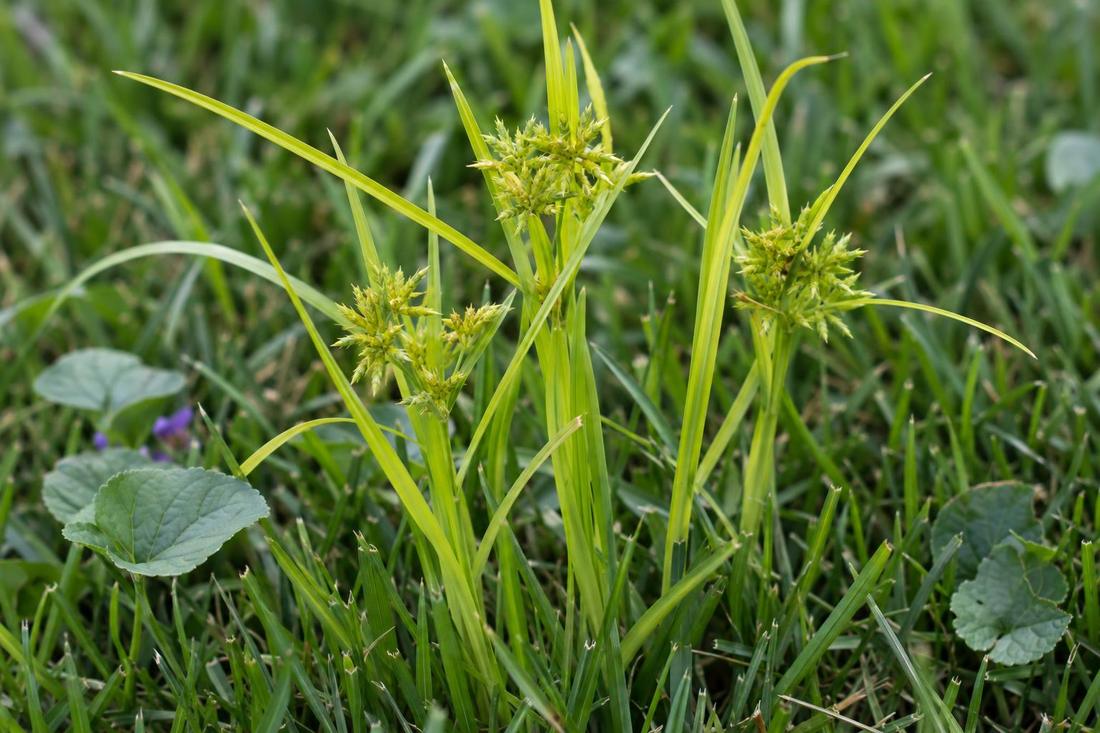
- Nutsedge is a sedge, not a grass, and ordinary lawn herbicides miss it.
- Wild violet has a waxy leaf and tough roots that shed many sprays.
- Both need specialty products and more than one treatment.
- Fixing wet soil and thin turf keeps them from coming back.
Nutsedge: the lime-green invader
Yellow nutsedge grows faster than the lawn, with yellow-green blades and a triangular stem you can feel when you roll it between your fingers. It forms underground tubers that sprout new plants. Pulling usually leaves tubers behind. Wet, compacted soil encourages it.
It needs a product labeled for sedges, applied when it is growing.
Wild violet: the waxy-leaf survivor
Wild violet forms dense patches with heart-shaped leaves and purple flowers in spring. The waxy leaf surface repels many sprays, and the roots store energy for regrowth. Control means repeat applications, often in fall and spring, with a sticker or spreader to help the product stick.
Shade makes it worse, so thin tree canopies help.
What to expect
Results are gradual. Sedge may yellow and thin within a couple of weeks, but tubers can send up new shoots, and a second or third treatment is normal. Violet often needs several seasons of repeat work in heavy infestations.
Patience and follow-up beat a single heavy application.
Keeping them out
Improve drainage, aerate compacted soil, mow at the right height and keep the lawn thick. Test the soil, since low pH favors violet. Avoid overwatering.
A healthy, dense lawn is the best long-term barrier.
Official sources and further reading
These are independent organizations. Links open in a new tab.
Quick answers
Will it harm my grass?
Specialty products are labeled for turf, and we choose them for your grass type and the temperature.
Can I use vinegar or household remedies?
They burn leaves but rarely reach tubers and roots, so weeds return.