Key takeaways
- Winter weeds sprout in fall and grow while many lawns are dormant.
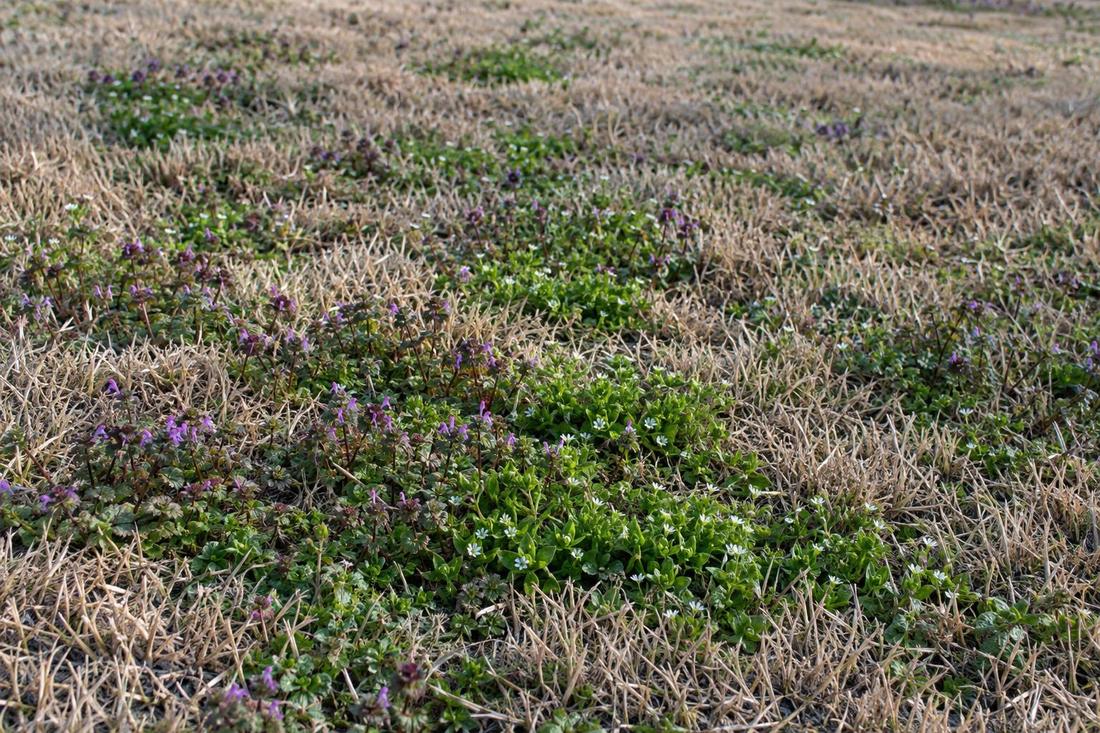
- Henbit has purple flowers and square stems, and chickweed forms low green mats.
- Poa annua is a light-green bunch grass that makes seed heads in spring.
- A September barrier and a late winter treatment handle most of them.
Meet the weeds
Henbit has scalloped leaves, square stems and small purple flowers in late winter. Common chickweed makes low mats of small oval leaves with tiny white flowers. Annual bluegrass, or poa annua, is a light green grass with seed heads from late winter into spring. Hairy bittercress is another early spring weed that shoots seed pods.
All of them germinate in fall and grow through winter.
Why they show up in dormant lawns
Bermuda and zoysia go dormant and brown in winter, which leaves open space and sunlight for cool-season weeds. Thin fescue also gives them room. The weeds are not harmed by cold and take advantage of mild days to grow.
The green in a brown lawn is almost always a weed.
Stopping them in fall
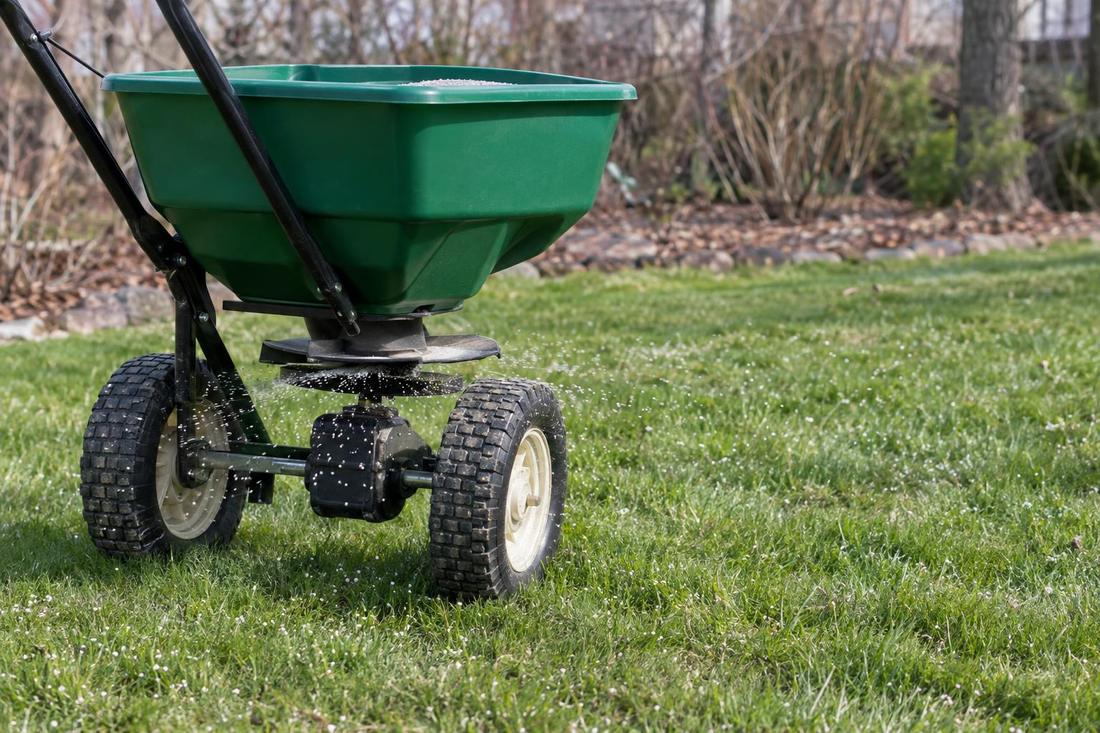
A pre-emergent applied in early to mid-September stops most winter weed seeds. It must go on before they sprout. If you plan to overseed fescue, we use a seed-safe plan or move the timing.
Fall is the easiest time to prevent a spring problem.
Cleaning up in late winter
On mild days, a selective herbicide works well on henbit and chickweed. Poa annua is best handled with a barrier and a plan, since it is a grass. Treat before the weeds make seed, in late winter and early spring.
We watch the temperature and pick the days.
Official sources and further reading
These are independent organizations. Links open in a new tab.
Quick answers
Can I just mow winter weeds?
Mowing helps a bit but does not stop them. They bounce back quickly.
Why is poa annua so hard?
It is a grass that makes thousands of seeds and sprouts in cool weather. A barrier and thick turf are the best controls.