Key takeaways
- Mow tall: three to four inches for fescue, lower for bermuda and zoysia.
- Never remove more than one-third of the blade at a time.
- Water deeply and infrequently, early in the morning.
- Sharp blades and varied patterns protect the turf.
Mowing height
Cutting grass too short thins the turf, exposes soil to sunlight and lets crabgrass and clover sprout. Taller grass shades the soil, grows deeper roots and crowds weeds. Fescue likes three to four inches, and warm-season grasses are cut lower, often one to two inches.
Raise the mower in summer heat.
Sharp blades and the one-third rule
A dull blade tears grass and leaves brown, ragged tips that invite disease. Sharpen blades a few times a season. Remove no more than a third of the leaf at a time so the lawn is not shocked. If the grass gets long, cut it in two steps a few days apart.
Leave the clippings. They feed the lawn.
Watering
Deep, infrequent watering builds deeper roots than frequent light sprinkling. About an inch a week, in one or two soakings, is a common target in summer. Water early in the morning so leaves dry fast and disease risk drops. Evening watering can invite fungus.
A tuna can on the lawn is a simple rain gauge.
Traffic and patterns
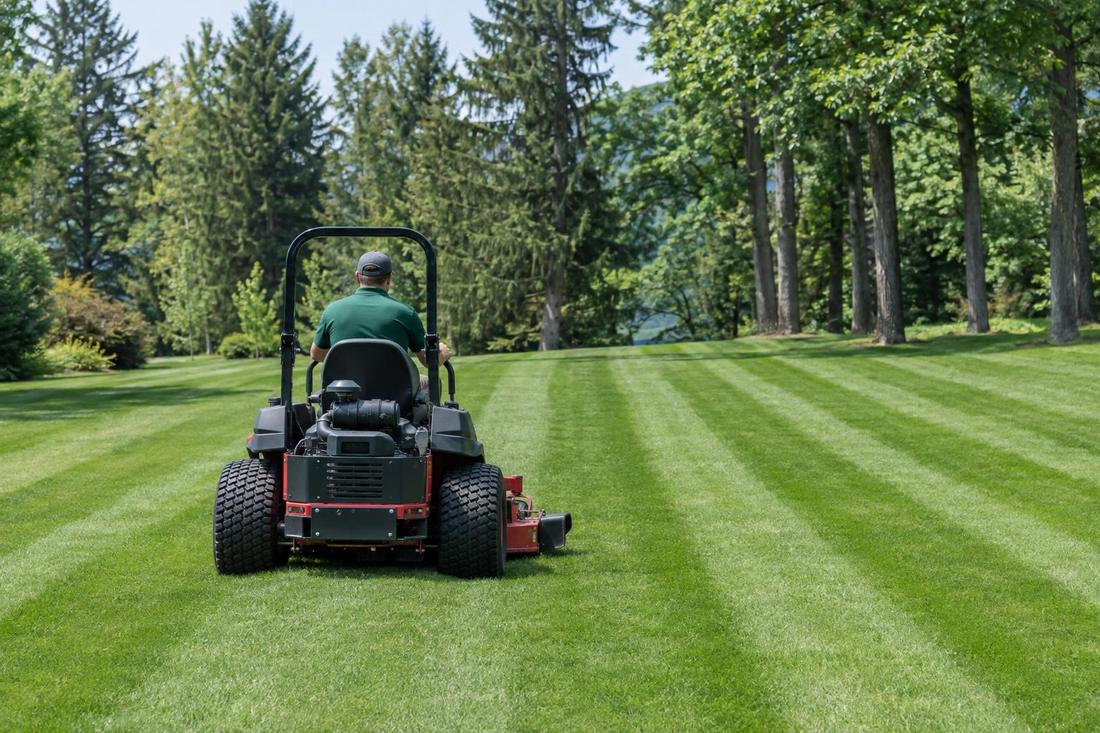
Change the mowing pattern each time to avoid ruts and leaning blades. Spread out heavy traffic, since compacted paths thin out and fill with goosegrass and knotweed.
Small habits add up to a thicker lawn.
Official sources and further reading
These are independent organizations. Links open in a new tab.
Quick answers
Is it OK to mow when the grass is wet?
It is better to wait. Wet grass clumps and cuts unevenly.
How do I know if I am watering enough?
The soil should be damp several inches down, and the grass should spring back when you walk on it.